Dates: 30 September and 1 October 2006
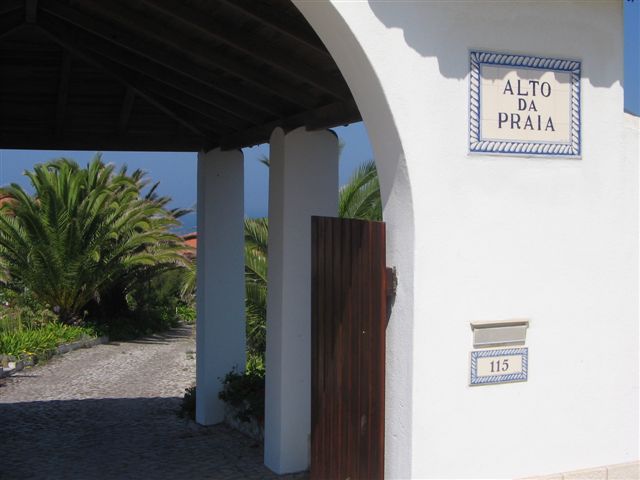
Venue: Alto da Praia, Praia Grande.
Introduction
There is a lack of true leadership that transforms the place of decision into a locus vitae. Is it possible, through a narrative education of women, to contribute to the construction of new ways of dealing with leadership?
This is one of the central questions of the action-research project Literacy Women Leadership of Fundação Cuidar o Futuro (FCF), a project carried out "in a network" among researchers from various Portuguese and "foreign" institutions.
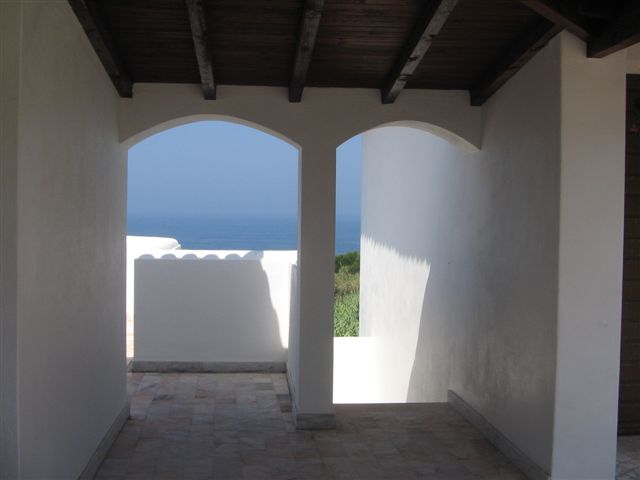
The FCF invites professional women from different contexts (groups, networks, women's organisations) to participate in a Between Networks meeting during the weekend of 30 September -- 1 October, at the Alto da Praia meeting centre, by the Atlantic Ocean, on the Sintra coast.
A finalidade desta iniciativa é promover uma experiência de “educação narrativa”. Uma educação narrativa parte de “histórias” pessoais e colectivas, o que permite inventariar e problematizar experiências, pensar e confrontar ideias, formular pistas de acção.
In this Between Networks meeting, leadership and empowerment experiences of the participants will be inventoried. Some of the ideas on this topic will be questioned and (re)formulated.
Methodology
There will be different moments of reflection and research. An introduction to the ongoing project will be made by Marijke de Koning, coordinator of the Literacy Women Leadership programme, where concepts and methods that structure the initial phase of the research will be addressed.
Some methods of experiential learning and qualitative research will be used: interpersonal conversation, individual recording, group conversation and focus group. The focus group, which allows the production of data through group interaction on the topic in question, will be audio recorded.
Participants who so wish will subsequently receive a copy of the transcribed records.
The five central guiding questions for reflection will be:
- What is your experience of leadership and power, exercised by women: by yourself and/or by others?
- What is your experience in terms of empowerment in women's contexts?
- Were there women who inspired you to deviate from "dominant", majority models and discourses? What are their "profiles"?
- Is it important, in a world of emancipated beings, to cultivate, in educational and women's training contexts, the master-disciple relationship?
- In terms of power and decision-making, how to motivate women not to copy the dominant models?
Programme
Saturday, 30 September 2006
| 10:30 | Reception of participants |
| 11:00 | Introduction to the action-research project and presentation of some theoretical references |
| 13:00 | Lunch |
| 14:30 | Conversing with the ocean in the background |
| 16:00 | Individual recording time |
| 16:30 | Tea |
| 17:00 | Conversation as experiential learning |
| 20:00 | Dinner |
| 21:00 | Women who inspire or inspired us |
Sunday, 1 October 2006
| 8:00 | Breakfast. |
| 9:30 | Focus groups |
| 11:00 | Coffee |
| 11:30 | Leads and perspectives |
| 12:30 | Closing of the meeting |
Organisation:
Fundação Cuidar O Futuro
Coordination:
Marijke de Koning